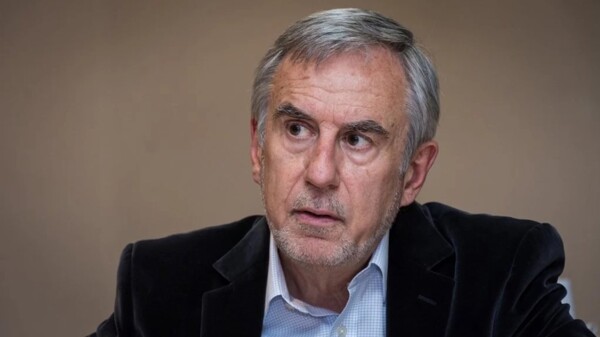
The speed camera business in the province of Buenos Aires is once again under judicial and political scrutiny, this time with Leandro Camani and his company Secutrans at the center of a plot that combines cross-accusations, criminal cases, suspicions of abuse of power, and a revenue collection system that has been criticized for years for its lack of transparency. According to the Argentine News Agency, Camani, a businessman linked to the supply and operation of speed control systems on Buenos Aires roads and highways, was once again exposed after filing a criminal complaint against Claudio 'Chiqui' Tapia, not in his role as president of the AFA, but as head of CEAMSE. The accusation points to alleged crimes of abuse of authority, violation of official duties, and illicit enrichment due to the interruption of radar operations on Camino del Buen Ayre. The judicial presentation was filed with the La Plata prosecutor's office, headed by Álvaro Garganta, the same one investigating the so-called 'megacase' of speed cameras, a case that uncovered a supposed network of lawyers, traffic court judges, and officials who facilitated reductions or annulations of traffic violations. Camani rejects this version and states that the suspension of the radars was arbitrary, without a prior administrative act and outside the legal competence of CEAMSE, which—according to his complaint—caused him direct economic damage. Beyond the exchange of accusations, the case once again puts the opaque functioning of the speed camera system in the province of Buenos Aires in the spotlight. The figure of Camani and the role of Secutrans are once again exposed in a system that, far from becoming transparent, seems to multiply conflicts, cross-accusations, and suspicions. There are also complaints for alleged money laundering and asset manipulation schemes that are still under judicial analysis. Regarding the alleged illicit enrichment of Tapia, the complaint filed by Camani does not provide concrete evidence and is limited to pointing out a patrimonial growth that considers it exorbitant, without supporting it with documentation. While the cases advance slowly in the courts, the speed camera business continues to operate in most of the Buenos Aires territory, with diffuse rules, fragmented controls, and strong economic interests at play. This scandal led to the resignation of the former Minister of Transportation of Buenos Aires, Jorge D'Onofrio, a man who emerged from the political agreement between Governor Axel Kicilloff and the Front for Renewal. Although from the La Plata penal branch they clarified that Camani's complaint against Tapia is processed as an independent case, the context is inescapable: the speed camera business appears once again crossed by power disputes, multimillion-dollar economic interests, and a system that, far from being ordered, continues to accumulate complaints. Camani's judicial offensive came just days after Tapia reported him for alleged extortion, along with leaders of the Civic Coalition such as the Pilar councilman Matías Yofe and the Buenos Aires legislator Facundo Del Gaiso. Even in parts of the speed camera megacase, the businessman would have lost procedural protagonism as a harmed party, a fact that reinforces doubts about his role within the general scheme. The conflict also occurs in a judicial scenario charged for the leadership of the AFA. For years, various journalistic and judicial investigations indicated that revenue from traffic fines became a multimillion-dollar business, with unclear concessions, crossed authorizations between municipalities and the province, and scarce effective control mechanisms. In this framework, Camani and Secutrans are mentioned in files where raids, contracts, and commercial links related to the operation of speed cameras are investigated. Tapia and the treasurer Pablo Toviggino face investigations for alleged tax irregularities, with accusations from ARCA and the DGI for unpaid labor contributions and the use of fictitious invoices.